You’ve got a great service, a qualified lead, and now it’s time to send the proposal.
But if you’re just attaching a static PDF with pricing and hoping for the best... well, good luck.
Whether you run an IT services company, a home improvement business, a consulting firm, or any kind of service-based operation, your proposal is your pitch deck, your contract, and your credibility — all in one document.
Here are five sections every service business proposal should include to actually get read and get signed.
1. A Warm, Human Introduction
This isn’t a copy-paste job from your website’s About page.
Start with a short paragraph that thanks the prospect, reminds them what problem you’re solving, and clearly states your intent.
That first impression matters more than you think.
2. A Clear, Detailed Scope of Work
Most scopes are a mess. Too vague, too generic, or written in jargon the client doesn’t understand.
Break your services down. Use bullet points. Be direct.
Example:
Instead of “Website Optimization,” say:
- Run speed audit
- Compress image files
- Implement caching
- Fix mobile responsiveness issues
3. Optional Add-Ons or Flexible Packages
Don’t assume your client knows what they need.
Let them see what’s possible by including optional services or upsells. This gives them ownership in the decision and helps you increase deal size without pressure.
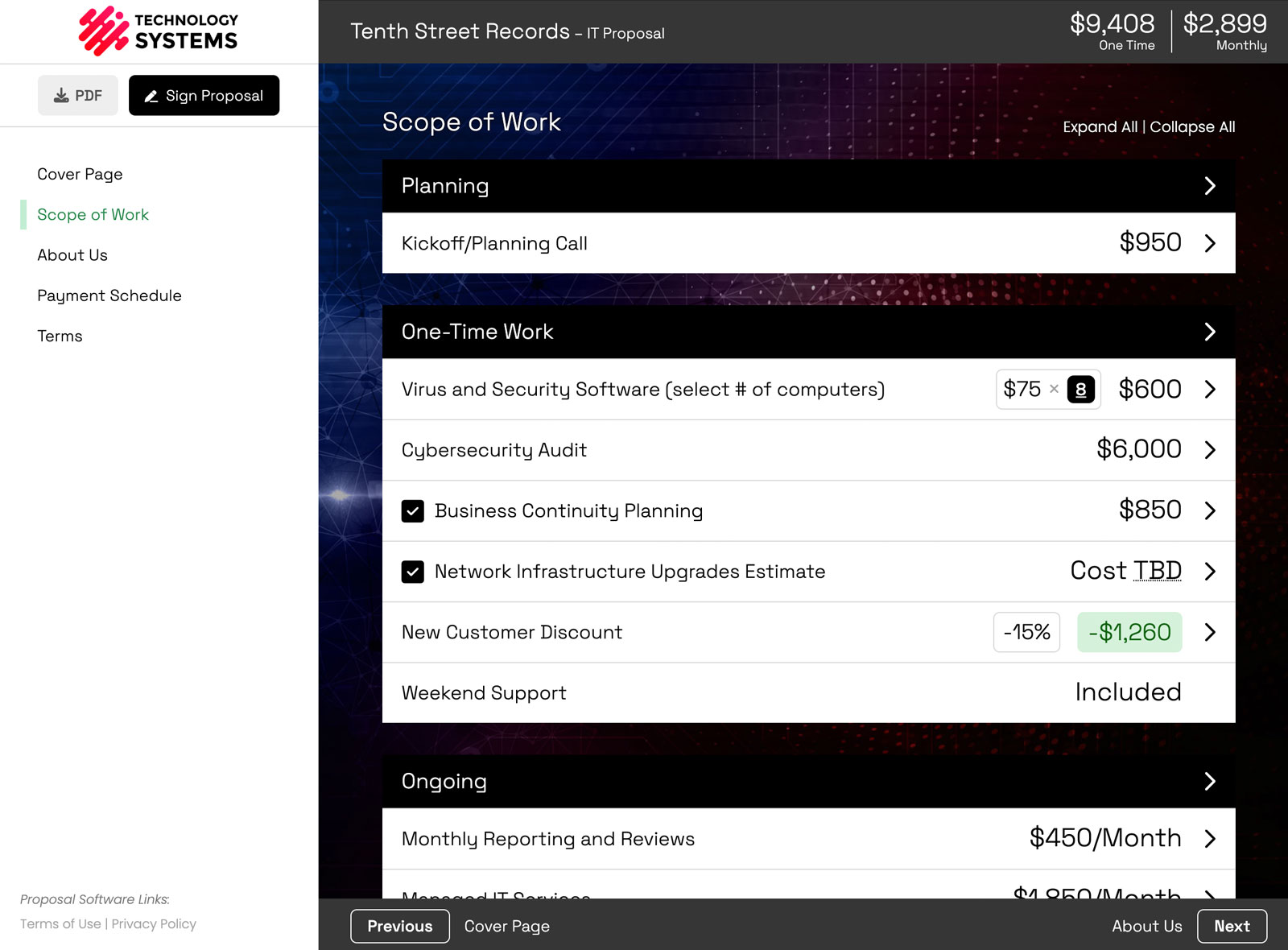
Smart Pricing Table lets clients toggle line items, choose packages, and customize scope - all in a way that keeps everything clear and professional.
4. Timeline and Payment Schedule
When does the project start? When are milestones due? How are payments handled?
This section removes ambiguity and reassures your prospect that you’re organized and reliable.
Even a simple breakdown like:
- Week 1: Onboarding and prep
- Week 2-3: Initial delivery
- Week 4: Revisions and finalization
…can go a long way in building confidence.
5. Straightforward Terms and Conditions
Nobody reads walls of legal jargon.
Instead, give them plain-language terms that answer key questions:
- What’s your refund or cancellation policy?
- What happens if the project runs long?
- Who owns the work at the end?
Keep it clear and brief. You can always link to your full legal terms elsewhere if needed.
Bonus: Don’t Just Send It - Review It Together
This one tip alone could double your close rate.
Instead of just emailing the proposal and hoping they read it, schedule a short proposal review meeting.
Let them know:
“We’ll walk through the proposal together - you’ll get the document at the end of the call.”
This does three things:
- Ensures they actually see it
- Gives you a chance to answer questions
- Keeps momentum going instead of losing steam in their inbox
(We go deeper into this strategy in this post.)
Final Thoughts
A great proposal isn’t about fluff - it’s about clarity, trust, and usability.
Smart Pricing Table helps you build proposals that include all of these must-have sections - scopes, upsells, flexible pricing, timelines, and clear terms - in a way that feels custom but saves you time.