"Can we just add one more page to the website? It'll only take a few minutes."
Famous last words. What starts as a "quick addition" turns into three extra weeks of work, blown budgets, and a client who somehow thinks they're doing you a favor by giving you "more opportunity to showcase your skills."
Scope creep isn't just annoying—it's profit poison. It turns winning projects into break-even disasters and transforms happy clients into demanding ones. But here's the thing: scope creep isn't inevitable. It's preventable.
Here's the 4-step system that protects your profits and keeps projects on track.
Step 1: Define Scope Like Your Profits Depend on It (Because They Do)
Vague scope is scope creep's best friend. When clients don't understand exactly what they're getting, everything feels like it should be included.
This is a scope creep disaster waiting to happen. "Some SEO work" could mean anything from basic meta tags to a complete content strategy. "Maybe some social media stuff" is an invitation for endless additions.
The Fix: Get specific. Painfully specific.
Instead of: "Website redesign with SEO"
Try this: "Homepage redesign, 5 interior pages, mobile optimization, basic on-page SEO for 10 target keywords, and Google Analytics setup."
Notice the difference? The second version leaves no room for interpretation. Clients know exactly what they're getting, and you know exactly what you're delivering.
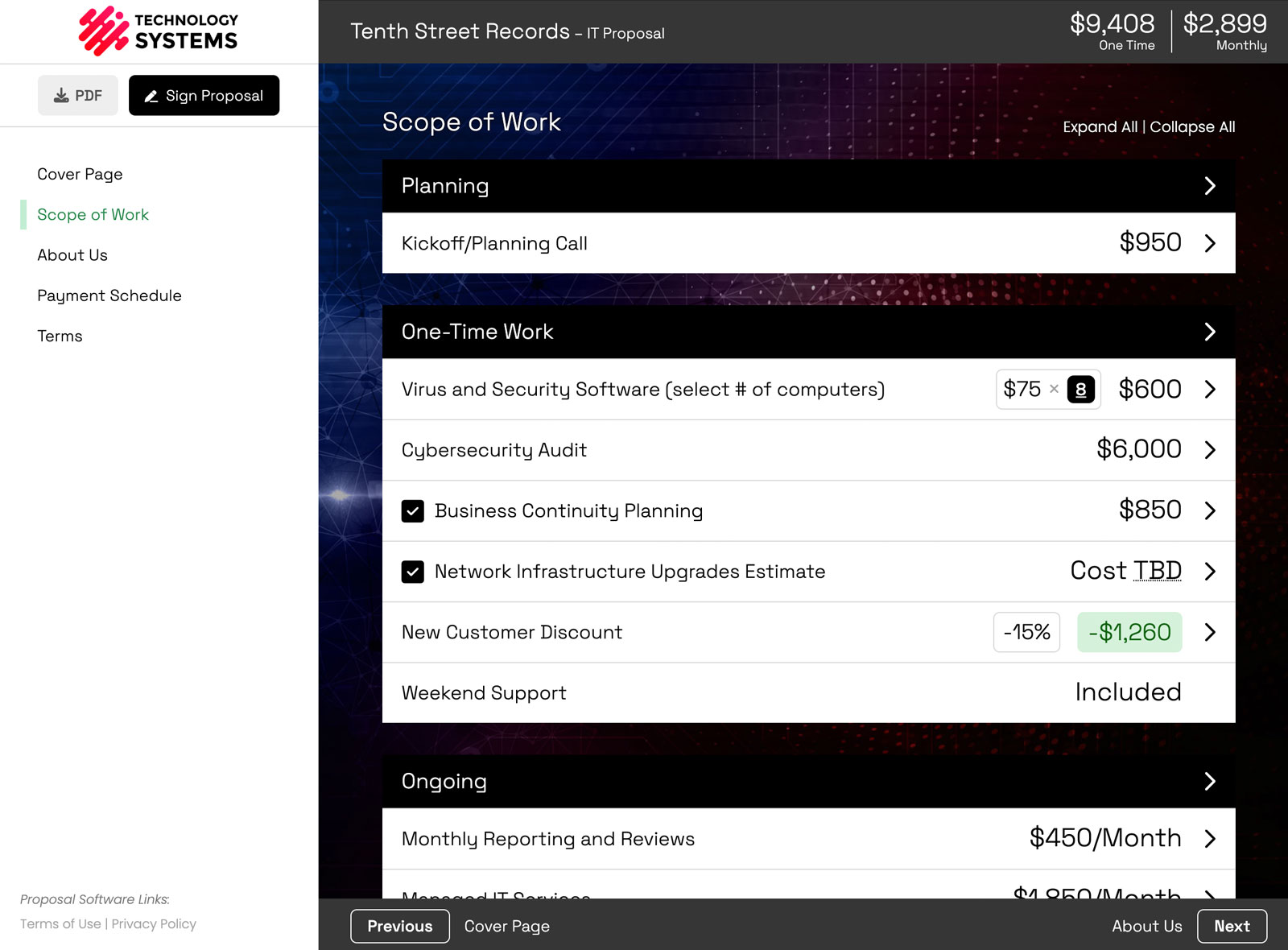
This is why successful agencies use modular proposal systems that break services into specific, defined components. When everything is clearly itemized, scope creep becomes obvious to everyone.
Step 2: Build a Scope Fortress with Clear Boundaries
Great scope definition isn't just about what you're including—it's about what you're not including. Every proposal should have an "Out of Scope" section that's just as detailed as your deliverables.
Example Out of Scope Section:
• Additional pages beyond the 5 specified
• E-commerce functionality
• Custom integrations with third-party tools
• Ongoing content creation
• Social media account setup or management
• Training sessions beyond the 2-hour handoff call
This isn't being negative—it's being professional. You're setting clear expectations and protecting both parties from misunderstandings.
Step 3: Create a Change Order Process That Actually Works
Here's the reality: scope will change. Clients will have new ideas, discover additional needs, or realize they forgot something important. The key is having a system that handles changes professionally without destroying your margins.
The Change Order Formula:
1. Acknowledge the request - "I understand you'd like to add a blog section to the website."
2. Clarify the scope - "This would include 5 blog post templates, an archive page, and category organization."
3. Provide the impact - "This addition would add $2,500 to the project cost and extend the timeline by one week."
4. Get approval - "Would you like me to prepare a formal change order for this addition?"
Notice what you're not doing: saying yes immediately, doing the work and hoping to get paid later, or making the client feel bad for asking.
This systematic approach to changes is exactly why agencies using professional scope management tools maintain better margins—they turn scope changes from profit-killers into profit opportunities.
Step 4: Train Your Clients (Yes, Really)
Most clients don't understand how creative projects work. They're used to buying products with fixed features, not services with flexible scope. It's your job to educate them.
During the kickoff call, explain:
You're not being difficult—you're being professional. You're teaching them that changes are fine, but they have consequences.
The Psychology of Scope Creep: Why Clients Push Boundaries
Understanding why scope creep happens helps you prevent it:
They don't see the work behind the work
Clients see the final result, not the hours of planning, coding, testing, and refinement. "Adding one more page" seems simple because they don't see the complexity.
They're excited about possibilities
When projects are going well, clients get inspired. They start imagining all the additional things they could do. This is actually a good sign—it means they're engaged.
They're testing boundaries
Some clients push to see what they can get for free. If you say yes to small requests, they'll keep pushing until you say no.
The Scope Creep Prevention Toolkit
Here are the tools that make scope management automatic:
1. Detailed Proposals
Every deliverable clearly defined with specific parameters
2. Visual Mockups
Show exactly what they're getting so there's no confusion
3. Change Order Templates
Standardized process for handling additions
4. Project Phases
Break work into phases with approval gates
5. Regular Check-ins
Catch potential scope issues before they become problems
The Bottom Line
Scope creep isn't a client problem—it's a system problem. When you have clear processes for defining, protecting, and managing scope, creep becomes the exception rather than the rule.
Your clients will respect you more, your projects will be more profitable, and you'll sleep better knowing exactly what you're delivering and what you're getting paid for.
Stop treating scope creep as inevitable. Start treating it as preventable.
Related Reading
Scope of Work Template
Get the exact template that prevents scope creep before it starts
5 Must-Have Sections in a Service-based Proposal
Learn how to structure proposals that set clear expectations
Want to see how clear scope definition works in practice? Schedule a demo to see how Smart Pricing Table's modular components make scope crystal clear for every project.