You’re on a sales call. The prospect says,
You nod. Smile. Scribble that into your notes.
But you don’t ask the most important follow-up question:
And just like that, you miss the chance to unlock everything you need to write a stronger, smarter proposal.
The truth behind timelines
Here’s what most agencies and service companies miss:
When a client says they want to start “ASAP,” that doesn’t mean anything.
It could mean:
- Their current provider just flaked
- Their boss wants updates by Q3
- Their funding is running out
- They’re shopping for quotes, but aren’t ready to act
Timelines are emotional. Political. Budget-driven.
And unless you know what’s really driving the deadline, you’re building your proposal on assumptions.
Why this question changes the game
When you ask, “What’s driving the timeline?” you’re doing three powerful things:
1. You shift from order-taker to advisor
You’re no longer just gathering specs. You’re diagnosing. You’re showing strategic thinking.
2. You uncover urgency (or the lack of it)
If the timeline’s fake, you don’t have to rush.
If it’s real, you can tailor your scope and delivery accordingly.
3. You position your proposal in context
Knowing the internal pressure or milestone gives you language to anchor the proposal:
That builds clarity—and confidence.
Real examples from the trenches
When you ask the timeline question, you start hearing things like:
- “We’ve got a board meeting coming up and need to show progress.”
- “Our competitor just launched something, and we’re behind.”
- “We lost our last agency and need to get back on track fast.”
These are gold. They help you:
- Set real expectations
- Prioritize parts of the project
- Adjust deliverables to fit urgency
- Speak to what actually matters in the proposal
And when there's no real urgency?
That’s valuable too.
If the client says, “No rush, just exploring options,” now you know:
- You don’t need to scramble
- You may need a nurturing strategy
- They’re more likely to ghost, so you can guard your time
Proposals take effort. So does scoping. Don’t waste your time chasing shadows.
Make it a habit: Ask early, ask often
Train yourself and your team to drop this question in every discovery call:
It’s disarming. It’s respectful. And it opens the door to real talk.
And real talk leads to better proposals, better scoping, and better clients.
Proposals shouldn’t be guesswork
When you don’t understand what’s behind the timeline, you’re just guessing.
And when you guess, you underbid, overpromise, or misfire entirely.
The more context you have, the more tailored (and valuable) your proposal can be.
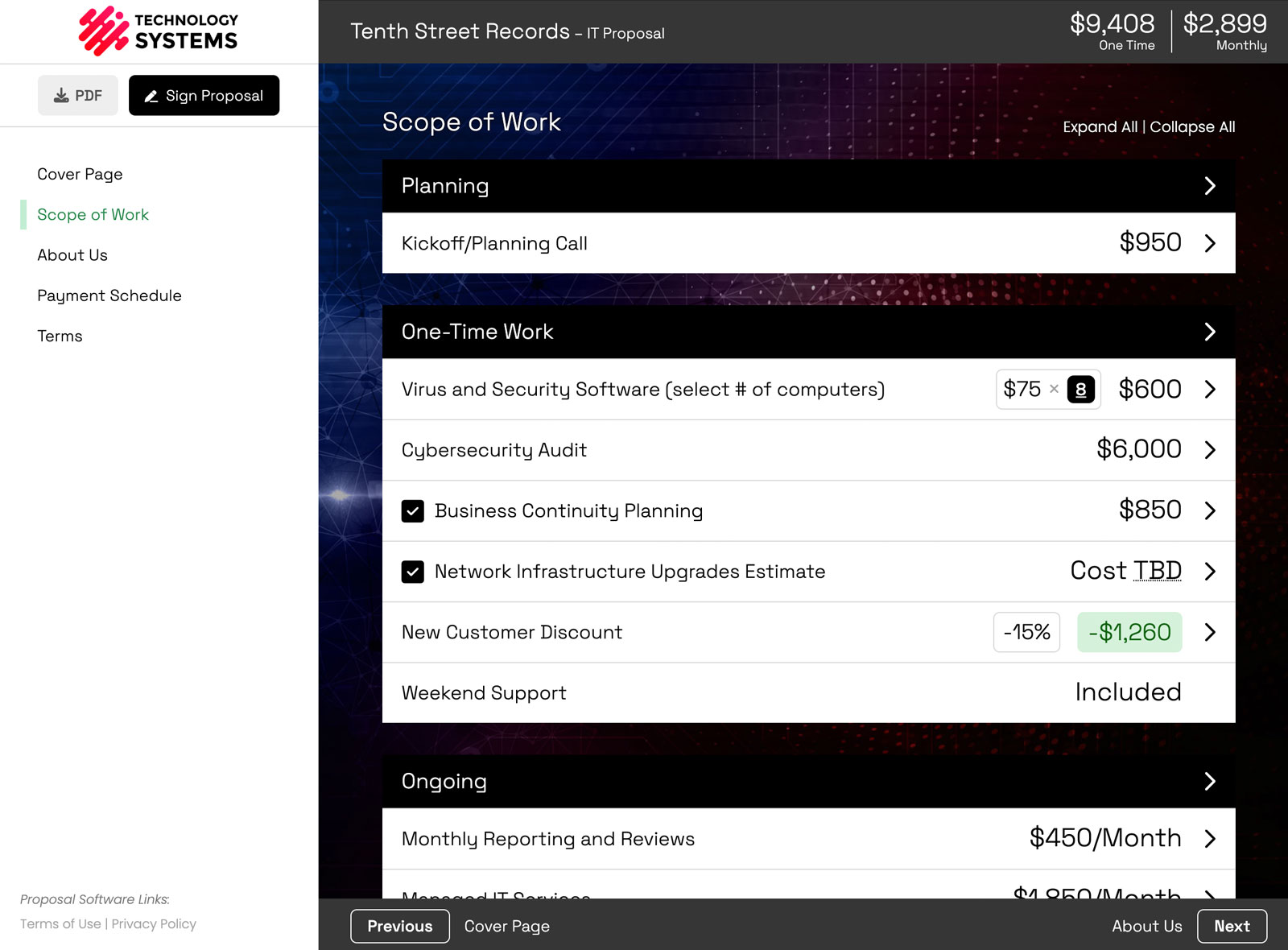
Smart Pricing Table helps you structure proposals fast—but smart proposals start with smart questions.
👉 Learn more or book a no-obligation demo