The honest way to create urgency in sales is to say what is already true about your business: how many client spots you have, when those spots fill, and (if it is real) a time-bound discount that helps you close the period. Fake countdown timers and "only 2 left" on unlimited inventory cost you trust the moment a buyer catches on.
Urgency closes deals. Everyone in sales knows this.
Most people think creating urgency means inventing a reason to decide tonight. A clock that resets. A stock count on something you can always make more of. A line about a deal expiring, even though it will still be there on Monday.
That kind of urgency is chintzy. Prospects can smell it. And it costs you the next time they need to believe you.
If you run a project-based business, you probably do not need to make anything up.
Why does fake urgency backfire in sales?
Buyers have seen the tricks. They have bought from sites with a "sale ends tonight" banner that is still there in February. They have been told a slot is the last one, then watched the same offer go out to the next person.
Once they catch you, two things happen.
- The deal slows down, not speeds up. They stop treating your dates as real. They wait, because waiting has never cost them anything with you.
- The relationship starts on a lie. You still have to deliver the work. Starting that relationship with a gimmick is a terrible trade for a slightly faster signature.
Fake scarcity also trains your team to reach for pressure instead of a better proposal. If the only way a deal moves is a made-up deadline, the document is not doing its job.
How do you create urgency without lying?
If you are an agency, a contractor, a consultant, or anyone who takes on a limited number of clients at a time, you already have real urgency built into how you operate. You just have not been saying it out loud.
Taking on new clients is basically a game of Tetris. You have only so many hours, so much team capacity, so many project slots.
That is not a sales tactic. That is just true.
So say it.
Use the capacity you actually have
At my old agency, I used to tell prospects something like this:
"Just to be upfront with you: we've got two spots open in June. After that, we're probably full until August."
That is it. No pressure, no gimmick. A fact about the business that happens to create a real reason to decide sooner rather than later.
The line only works if it is true. If June is empty and August is empty, do not say you are full. Pick the real constraint: a specialist's calendar, a start date you can actually staff, a kickoff window before a holiday. Specific beats dramatic.
Tell them when other prospects want the same spots
If you are genuinely talking to more people than you have room for, say that too:
"I want to be straight with you. I'm talking with a few other prospects for these same two spots. I don't want you to take your time deciding and come back to find we're booked. I'd rather you know that now."
That is not manipulation. That is respecting them enough to give them the real picture.
If you are not talking to anyone else, skip this. Invented competition is the same as a fake countdown, just spoken instead of designed.
Should you offer a discount to close a deal faster?
Sometimes. Not as a costume for scarcity. As a straightforward trade.
Instead of dressing up urgency as a disappearing offer, you can be honest about wanting to close business now:
"If you're able to sign by the end of the month, I can knock 10% off. It genuinely helps me close out the quarter, and I'd rather give you the win than a stranger."
You are not hiding anything. You are telling them exactly why the offer exists. A real incentive with a real deadline still moves people, because both halves are true.
Two rules so this does not turn into the thing you were trying to avoid:
- The date has to mean something. End of month, end of quarter, before a start date you cannot hold. If the discount will still be there in six weeks, it is not a deadline. It is a permanent markdown with extra words.
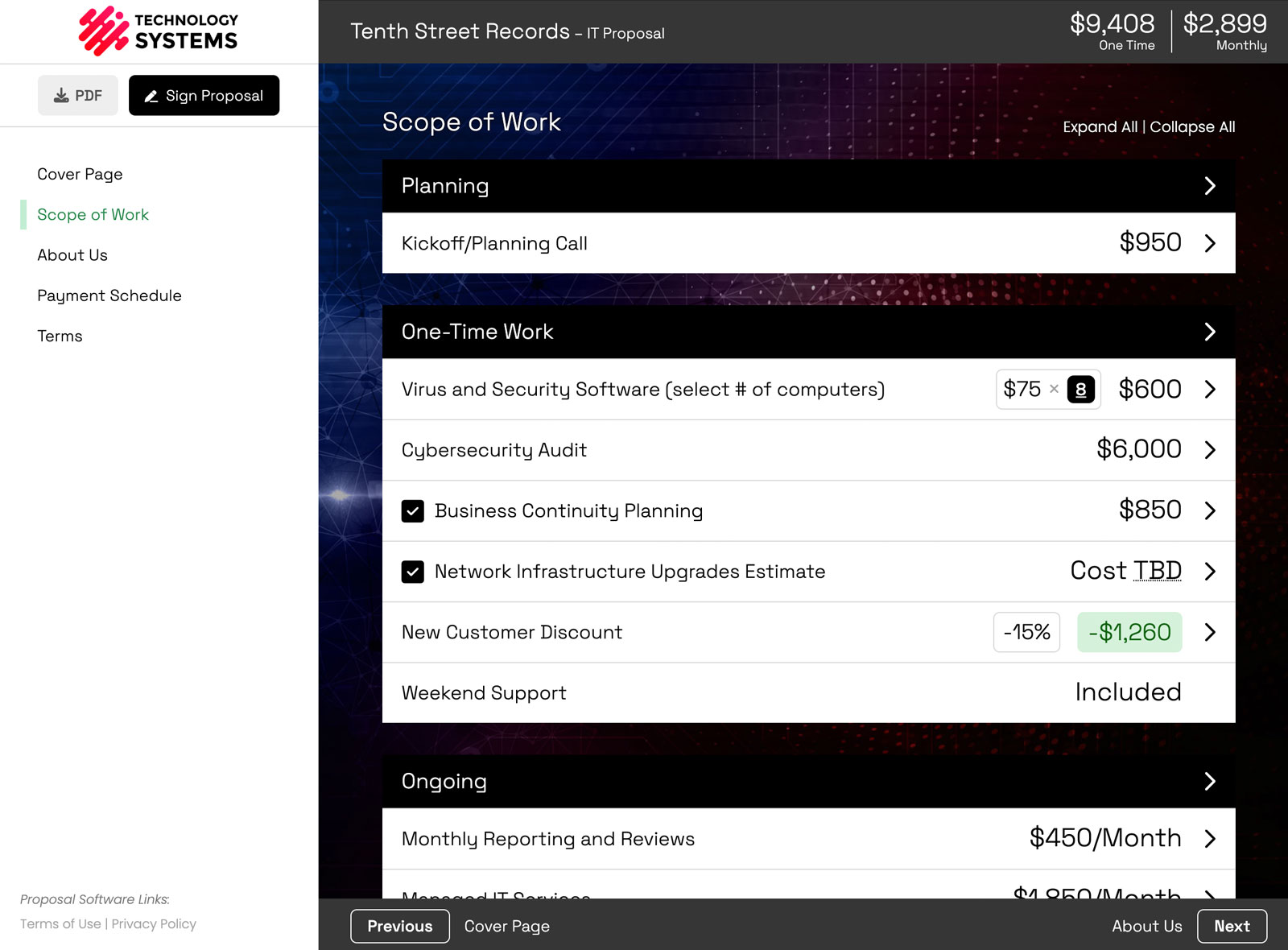
- Put the number in the proposal. Do not bury it in a verbal aside they will forget. If you use an interactive pricing table, the discount is a line they can see, not a promise they have to trust.
Ten percent is an example, not a formula. Pick a number you can live with if they take it, and a date you will actually honor.
What is the difference between scarcity and urgency in sales?
People use the words as synonyms. They are not.
| Approach | What you say | Why it works or fails |
|---|---|---|
| Fake countdown | This deal expires tonight | Fails the moment they check later and it is still there |
| Fake stock | Only 2 left | Fails when inventory is unlimited and they know it |
| Limited capacity | Two spots in June, then August | Works because staffing is a real constraint |
| Competing demand | Other prospects for the same spots | Works only if you are actually in those conversations |
| Intentional discount | 10% if you sign by month-end, because it helps me close the quarter | Works because the reason and the date are both real |
Scarcity is "there is not enough of this thing." Urgency is "there is a reason to decide now." For project-based work, the scarce thing is usually your team's time, not a SKU. Lead with that, and you do not need a fake clock.
This is different from the urgency you learn on the buyer side. Asking what happens if they do nothing tells you whether their problem actually hurts. If the answer is "not much," you are competing with inertia, not another vendor. That is when seller-side honesty matters most: they need a real reason to move, and a fake one will not survive the week.
Should you put a deadline in your proposal?
Yes, if the deadline is a fact about your calendar or a discount you will actually pull. No, if it is a sentence you added because a blog told you every proposal needs one.
Say it live first. A proposal review meeting is the right place: you can read the room, answer the "can you hold that spot?" question, and not hide behind an email.
Then put a short, factual line in the document so it survives the forward-to-a-colleague step. Near the timeline or next steps is enough:
That is not a threat. It is the same information you would give a friend who asked when you could start.
If you offered the month-end discount, write the date and the percentage next to the price, not in a footnote. The people who were not on the call should be able to see it without a translation.
When should you not create urgency?
When you do not have any.
An empty bench for the next three months is not two spots in June. A discount you will still honor in November is not a quarter-end close. A pipeline of one is not "a few other prospects."
In those cases, the honest move is to make the proposal easier to say yes to: clearer scope, cleaner options, a faster turnaround. Speed still creates momentum. Invented pressure does not.
Also skip it when the buyer already has real pain. If their timeline is being driven by a launch, a contract end, or a broken system, you do not need to add yours on top. Confirm their date, staff to it, and get out of the way.
Smart Pricing Table is interactive proposal software with live pricing tables for agencies, IT companies, and consultants. The urgency belongs in the conversation and in the terms. The pricing table is where a real discount, a real start date, and a real set of options stay visible while they decide.
or start a free trial and try it yourself.
Explore more
Buyer-side urgency starts in discovery
Say the real constraint live, not in an email
Capacity, options, and price in one place
Frequently Asked Questions
How do you create urgency in sales without being pushy?
Say the true constraint out loud: how many client spots you have, when those spots fill, and whether other real prospects are talking about the same dates. Pushy is a fake deadline. Direct is a fact about your calendar that helps them decide.
What is the difference between scarcity and urgency in sales?
Scarcity is a limited supply of something. Urgency is a reason to decide now. For agencies and consultants, the scarce thing is usually team capacity, not a product with two units left. Honest urgency uses that capacity (or a real, dated discount) instead of a countdown timer.
Is it okay to offer a discount to close a deal faster?
Yes, if you tell them why the discount exists and you will actually pull it after the date. A 10% cut to close the quarter is a trade. The same 10% with a fake "expires tonight" label is the gimmick this post is arguing against. Write the number and the date in the proposal so it is not just a verbal aside.
How do you create urgency in a proposal?
Put a short factual line near the timeline or next steps: the start dates you can staff, and what happens when those dates fill. If you offered a time-bound discount, show it in the pricing table with the date attached. Walk them through it on a proposal review meeting rather than hoping they notice it in an email.
What if I don't have limited capacity?
Do not invent it. Fake spots and fake competition are the same as fake stock counts. Make the proposal easier to approve instead: clearer scope, fewer surprises, a faster turnaround. If the buyer's own timeline is already painful, you do not need to add yours.
Should every proposal have an expiration date?
Only if the date is a real constraint you will honor: a kickoff you cannot hold, a discount that ends, a quarter you are trying to close. A boilerplate "this proposal expires in 14 days" that you always extend teaches buyers to ignore your dates.
You might also like:
👉 3 Questions to Ask Before You Write Your Next Proposal
👉 What's Driving the Timeline? The Question That Changes Everything