A reactivation clause is a line in your proposal or contract that lets a client pause after work has started, if they pay a pause fee (a flat dollar amount or a percentage, whichever is greater) and go to the back of the queue when they want to restart. You almost never collect it. Walking them through the process is usually enough to keep the project moving.
You know the email.
You're mid-project. Things are moving. Then it shows up: "We need to pause the project."
It doesn't matter why. Budget. Internal delays. A shift in priorities. The reason almost never matters as much as the impact.
You've already allocated your team. You built the schedule around this work. You may have turned down other deals because you assumed this customer would keep you busy.
Now that time is just gone. And nothing in your agreement accounts for it.
What is a reactivation clause?
One thing that saved me at my old agency: the reactivation clause.
It's a simple line. If the customer needs to pause after you've started, that's completely fine.
But there is a fee to pause it, a flat dollar amount or a percentage, whichever is greater. And they go to the back of the queue when they're ready to restart.
That's it. No drama. No surprise invoice after the fact. It's in the proposal before anyone signs.
What should the reactivation clause actually say?
Keep it in plain English. This is not a legal form, and it is not legal advice. Have someone who knows your contracts look at the final wording.
The clause needs two things:
- A pause fee. A flat dollar amount or a percentage of the remaining project fee, whichever is greater. The "whichever is greater" part keeps a small project from getting a fee that feels huge, and a large project from getting a fee that is cheap.
- The back of the queue. When they are ready to restart, they do not jump back into the slot you held. They wait until you have capacity again.
Something in this shape is enough to start from:
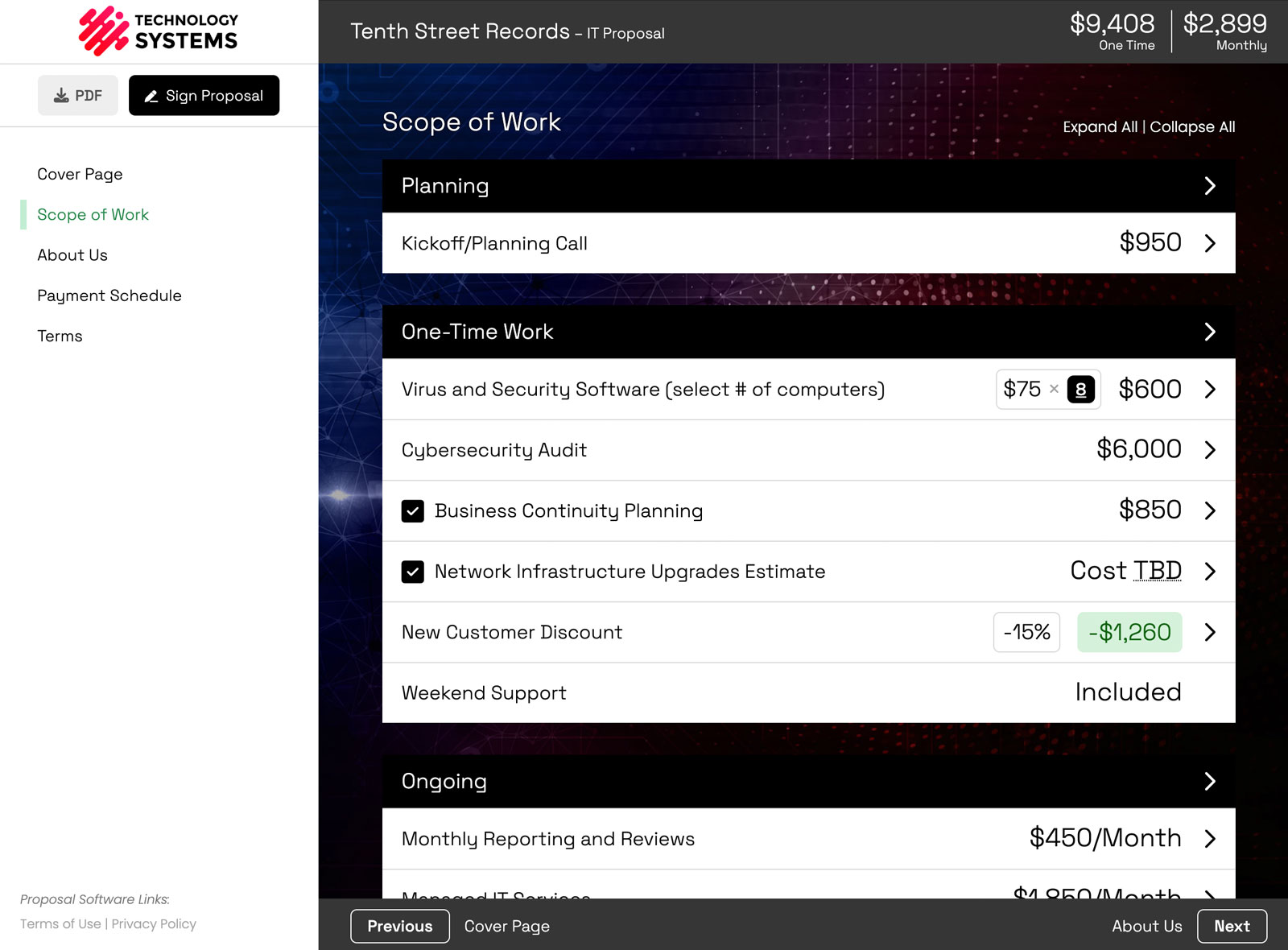
If you already use a scope of work page in the proposal, put the clause there, next to the other terms, so the client sees it before they approve.
How do you walk a client through a pause request?
Here's the part that surprises people: you almost never actually have to use it.
When a customer wants to pause, you don't push back right away. You walk them through your process.
You tell them you understand. Things come up, and pausing is completely okay. You also let them know it comes with real costs on your end, because you've already allocated a team and planned around their project.
Then you lay out the fee. And the queue.
More often than not, that's the moment things shift. The customer decides the pause isn't worth it, and you figure out together how to keep the project moving. Maybe you slow the pace. Maybe you cut a phase. Maybe they find the budget after all.
When do you actually collect the pause fee?
On the rare occasion they pause anyway, you collect. You're not left absorbing the full cost by yourself.
The fee covers some of the idle time, and some of the cost of getting everyone back up to speed when the work returns. The back of the queue protects the clients who didn't pause.
If they never restart, the fee is what you have. That's still better than a hole in the calendar and nothing in the agreement.
How is a reactivation clause different from putting a proposal on hold?
These get mixed up because both involve a pause. They are not the same moment in the deal.
- On Hold is for a stalled proposal. The client hasn't signed. Work hasn't started. You don't want to mark the deal lost, and you don't want it sitting in your active pipeline forever. That's what putting a proposal on hold is for.
- A reactivation clause is for after work has already started. The team is allocated. The calendar is built. A pause now costs you real capacity.
If the proposal is sitting in someone's inbox, use On Hold. If the team is already on the job, use the clause.
Who should put a reactivation clause in their proposal?
Anyone who sells project-based work: agencies, IT companies, consultants. If you allocate people to a job and that job can stop mid-stream, you need something in writing.
If you sell a retainer that keeps running either way, you may not need this. If you sell implementations, websites, campaigns, migrations, or any scoped project with a start and a finish, you do.
Put it in the next proposal, not the next time someone emails you to pause. By then it's a negotiation. In the proposal it's just a term, sitting next to the rest of the questions you should settle before you write.
Smart Pricing Table is interactive proposal software with live pricing tables for agencies, IT companies, and consultants. The clause lives in the terms. The pricing table is where the rest of the deal stays visible while you work through the pause.
or start a free trial and try it yourself.
Explore more
For stalled proposals, not started work
Where terms like this belong
Project-based work, priced in the open
Frequently Asked Questions
What is a reactivation clause in a project proposal?
A reactivation clause is a term that lets a client pause after work has started, if they pay a pause fee and go to the back of the queue when they want to restart. It belongs in the proposal or contract before anyone signs, so a mid-project pause is a process instead of a surprise.
What should a reactivation fee be?
Use a defined dollar amount or a percentage of the remaining project fee, whichever is greater. Pick numbers that cover some of the idle time you will absorb, without turning a reasonable pause into a fight. There is no one right number. The important part is that a number exists before the pause email arrives.
Do I need a lawyer to add a reactivation clause?
Have someone who knows your contracts review the wording before you rely on it. The plain-English example in this post is a starting point, not legal advice, and it is not a substitute for a contract your lawyer has signed off on.
What happens if the client pauses anyway?
You collect the fee and they go to the back of the queue. You don't eat the full cost of an allocated team sitting idle, and you don't bump current clients to make room when the paused project comes back.
Is a reactivation clause the same as putting a proposal on hold?
No. On Hold is for a stalled proposal, before anyone has signed and before work has started. A reactivation clause is for after the project is already underway.
Is a reactivation clause the same as a kill fee?
No. A kill fee is usually what you charge if the client cancels the work. A reactivation clause is what you charge if they pause and may come back. You can have both, but they cover different moments.
You might also like:
👉 How to Put a Proposal On Hold (Without Marking It Lost)
👉 3 Questions to Ask Before You Write Your Next Proposal
👉 Sales Meetings Are Optional. Proposal Review Meetings Are Not.